13 August 2026
Wine Box Structures Compared: Which Fits Your Bottle
Wine box structures split into six practical types we build every week: rigid lid-and-base, magnetic closure, drawer, foldable, double-door, and boxes with handles. Each behaves differently in freight, on a shelf, and in a buyer's hands. The right choice depends on your unboxing moment, your shipping volume, and how many times the box gets handled before it reaches the customer.
Rigid Lid-and-Base Box
This is the classic two-piece wine box. A lid drops over a base, and the bottle sits in an insert that holds it at four points. No unsupported neck or shoulder. That rule is not negotiable here because a bottle that rattles in a rigid box is worse than no box at all. You get a solid feel, a clean print surface, and a box that stacks well.
The trade-off is freight. Rigid boxes ship assembled or nested, and they take up real volume. You cannot flatten them. If your order goes by sea and every cubic meter counts, a rigid box will cost you more than a foldable one, even before we talk about the board. Hand assembly is moderate: the insert goes in, the lid goes on. Nothing complex, but it is slower than a simple fold-and-glue.
Where it fails: a lid that is too tight or too loose. We hold the box body to plus or minus 2 mm, and the insert to plus or minus 1 mm. If those tolerances drift, the lid fights you or falls off. Buyers who want a premium unboxing for a single bottle or a two-bottle set should look at our cardboard wine boxes for rigid options. This structure suits wineries and gift packers who value presentation over freight efficiency.
- Holds the bottle at four points, no unsupported neck or shoulder.
- Ships assembled or nested, so freight volume is higher than foldable.
- Box body tolerance is plus or minus 2 mm, insert plus or minus 1 mm.
- Best for premium single or two-bottle gift sets.
Magnetic Closure Box
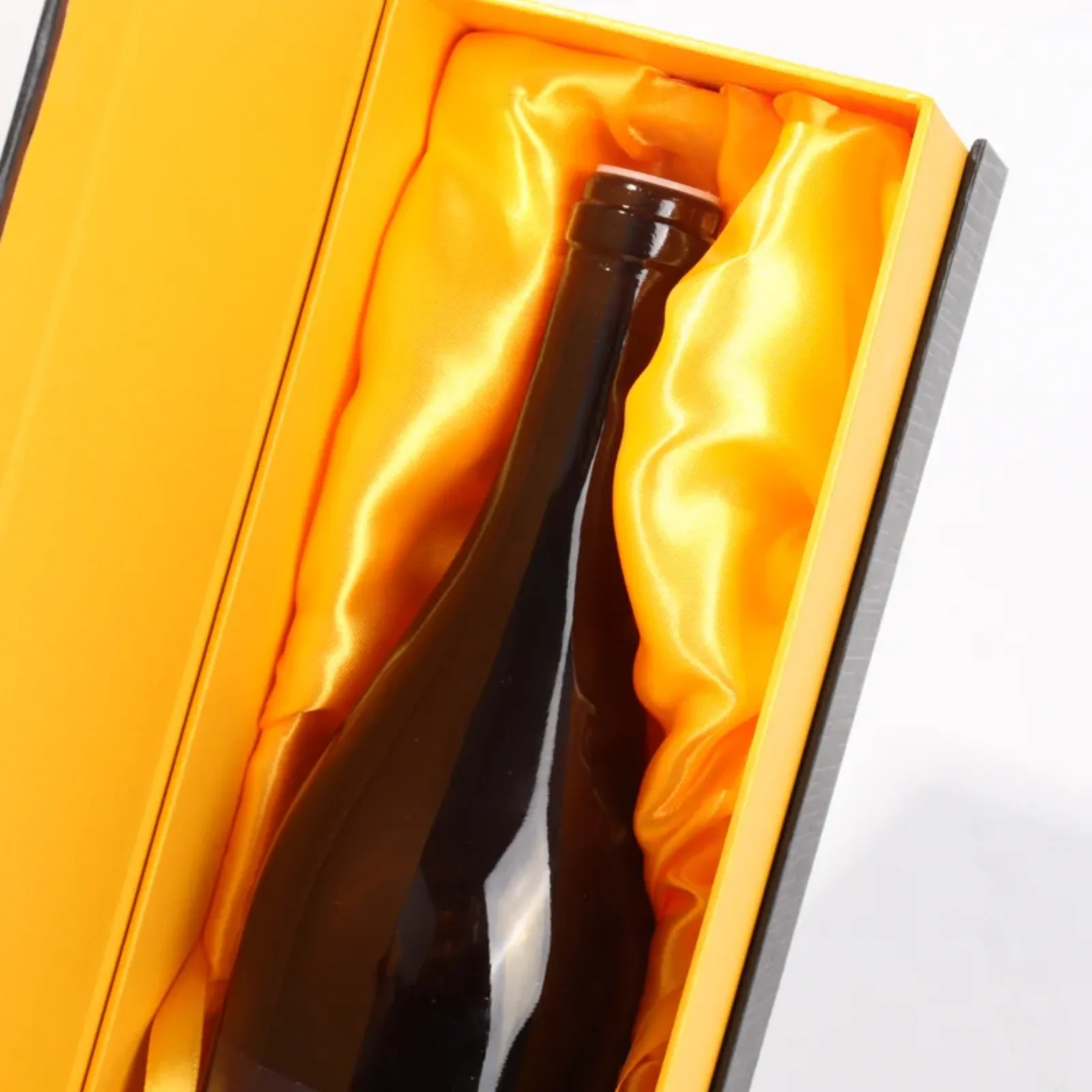
A magnetic closure box is a rigid box with magnets in the lid and base. The lid snaps shut with a light pull, and it stays shut. No ribbon, no latch. That is the whole point: the unboxing feels finished without any extra hardware.
Cost is higher than a plain rigid box because you add magnets and the hand assembly step to seat them. And magnets are unforgiving. If the position is off, the lid does not align, and the box looks broken even when it is new. We keep magnet position within plus or minus 1 mm. That is a control tolerance, not a guarantee, but it is the number we check on every batch.
Where it fails: a weak magnet or a misaligned one. The lid creeps open in shipping, or it sits crooked on the shelf. Buyers who sell wine as a gift or a corporate present often ask for this structure. If you want a rigid box with a clean close, this is the one. See our leather wine boxes for magnetic closures with a soft-touch finish.
- Magnets hold the lid shut, no ribbon or latch needed.
- Higher material and hand assembly cost than a plain rigid box.
- Magnet position checked to plus or minus 1 mm.
- Suits gift and corporate buyers who want a clean close.
Drawer Wine Box
A drawer box slides open like a small drawer. The bottle lies in a tray, and the outer sleeve wraps around it. You pull a ribbon or a finger notch, and the tray comes out. It is a slower, more deliberate unboxing than a lid.
The structure needs a stiff outer sleeve or the drawer will jam. We use greyboard at 1200 g minimum, and 1400 g if the bottle is heavy, like a spirits bottle. The facing paper is 157 g minimum specialty or coated. That combination keeps the sleeve square under load. Hand assembly is higher than a lid-and-base because you have to fit the tray into the sleeve and set the pull.
Where it fails: a drawer that sticks or a tray that tips out too far. The insert still has to hold the bottle at four points, and the tray needs a stop so it does not dump the bottle on the table. Buyers who want a reveal that takes two hands and a second of attention choose drawer boxes. They are common for single-bottle premium wines. Have a look at our wooden wine boxes if you want a drawer in wood rather than board.
- Tray slides out of a sleeve, slower unboxing than a lid.
- Needs greyboard 1200 g minimum, 1400 g for heavy bottles.
- Higher hand assembly to fit tray and set the pull.
- Common for single-bottle premium wines.
Foldable Wine Box
A foldable wine box ships flat and erects into a box. That is the whole reason it exists: freight volume. A flat box takes a fraction of the space of an assembled rigid box, so you can pack more units per carton and per container. If you ship by sea and your margin lives or dies on volume, this is the structure you ask about first.
The engineering is in the crease. A foldable box has to fold flat without cracking and then erect with corners at 90 degrees. We check that creases do not crack and that corners sit square when erected. The board is greyboard, same as rigid boxes, but the crease lines are scored to fold. Hand assembly is low because the box is mostly machine-made; the buyer or the packer erects it.
Where it fails: a crease that splits after a few cycles, or a box that will not hold its shape. We run a 1.2 m six-face drop test with the bottle loaded and a stacking top load of 40 kg or more for 24 hours. If the box survives that, it will survive a courier. Buyers who ship direct to consumers or to retail and want to cut freight cost should look at our foldable export wine box page for the full picture.
- Ships flat, so freight volume is much lower than rigid.
- Creases must not crack, corners must sit at 90 degrees when erected.
- Low hand assembly, mostly machine-made.
- Best for sea freight and direct-to-consumer shipping.
Double-Door Wine Box
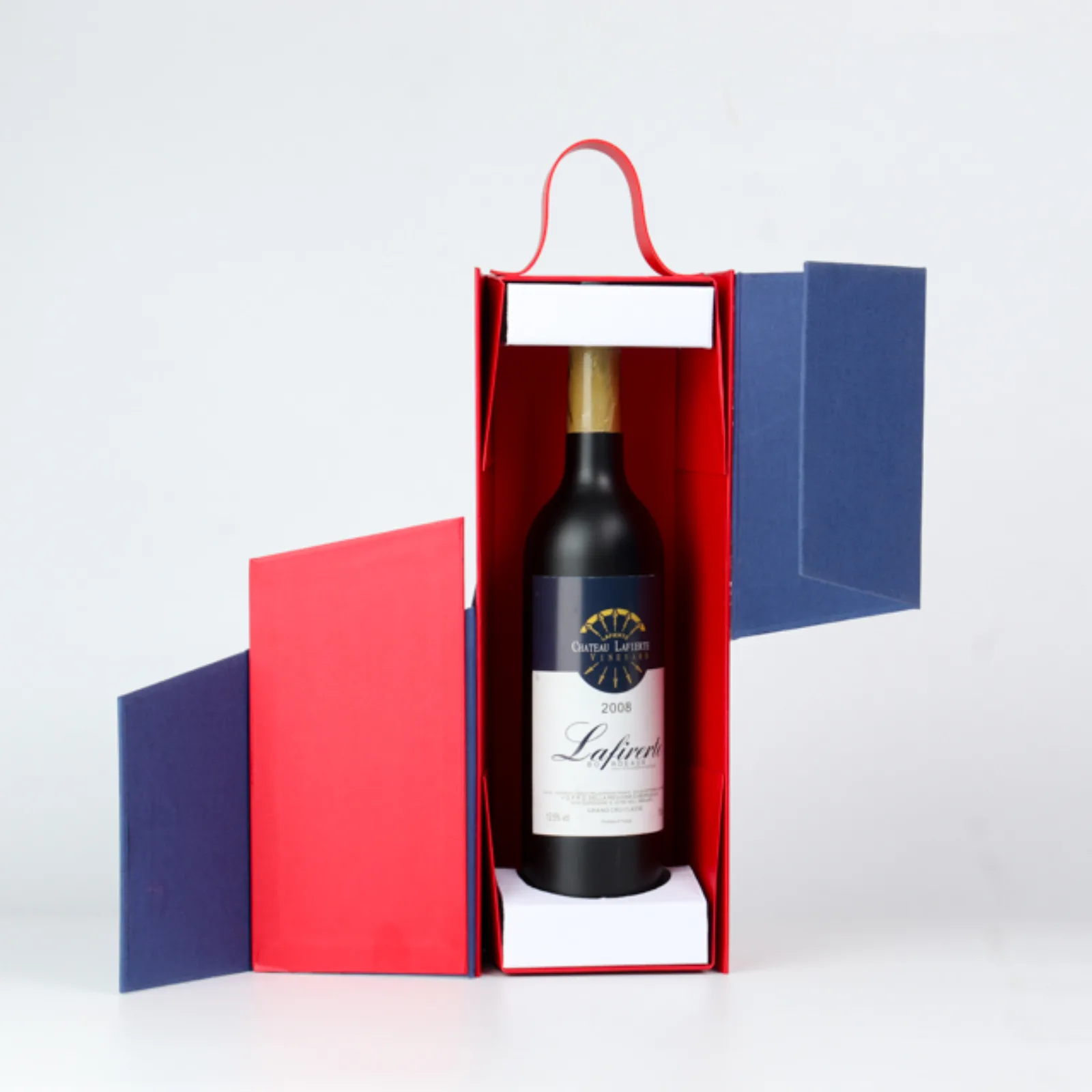
A double-door box opens like a cabinet: two front panels swing out to reveal the bottle. It looks more expensive than a lid box because the opening is wider and the reveal is staged. That look comes at a cost in board and in fitting.
The doors need a stiffer board or they bow. If the doors bow, the box looks cheap even before it is opened. We recommend greyboard 1400 g for double-door boxes, not the 1200 g minimum. The insert also has to be well fitted, because the doors do not hold the bottle; the insert does. A loose insert in a double-door box means the bottle shifts and the doors press against it.
Where it fails: bowed doors, a misaligned catch, or a hinge that tears. We check the insert with a shake test: 10 seconds of shaking, no movement. Tilt 45 degrees, no slide. Invert, no release. If the insert passes that, the doors can do their job. Buyers who want a presentation piece for a high-end bottle often pick double-door. It suits two-bottle sets especially, because the doors frame both bottles. See our cardboard wine boxes for double-door options in rigid board.
- Two front panels swing open like cabinet doors.
- Needs stiffer board, 1400 g greyboard, or the doors bow.
- Insert must pass shake, tilt, and invert checks.
- Suits high-end single or two-bottle presentation sets.
Boxes with Handles
A handle changes how the buyer carries the box. It can be a rope handle, a ribbon handle, or a die-cut handle in the board. The box itself can be rigid or foldable. The handle is the point: the box is meant to be carried, not just opened.
Cost depends on the handle type. A die-cut handle is cheap but weak; a rope handle costs more and needs hand assembly to thread and knot. A ribbon handle is in between. The failure mode is always the same: the handle tears out of the board, or the knot comes undone. We test the box with the bottle loaded, and the handle is part of that. A 1.2 m drop test with the bottle inside will find a weak handle fast.
Where it fails: a handle that looks fine but rips on the first carry. That is a board problem or a knot problem. Buyers who sell wine as a gift that gets handed over in person, or as a retail pack that the customer carries home, ask for handles. They suit two-bottle and three-bottle boxes where the weight is higher. Our quality control page explains the drop and vibration checks we run on every structure, including handles.
- Handle can be rope, ribbon, or die-cut in the board.
- Cost varies by handle type; rope needs hand assembly.
- Failure mode is handle tear-out or knot failure.
- Tested with bottle loaded, including a 1.2 m drop.
How to Choose
Pick by the moment that matters most. If the unboxing is the selling point, a rigid lid-and-base or a drawer box gives you the strongest reveal. A magnetic closure adds a clean snap for a few cents more per unit. If freight cost is the pain, a foldable box is the only real answer, and we check the creases and corners so it still looks right when erected.
Think about how many times the box is handled. A box that goes from your warehouse to a courier to a customer's door gets handled three or four times before it is opened. A box that sits on a retail shelf gets picked up and put down dozens of times. For that, you need a stiffer board and a handle that will not tear. Double-door boxes are the worst for high-handling retail because the doors take abuse every time someone touches them.
And be honest about the bottle. A heavy spirits bottle in a foldable box is a risk. A light 750 ml wine bottle in a double-door box is fine. The insert rule stays the same: four points of contact, no unsupported neck or shoulder. If your bottle shape is unusual, send us the dimensions or a sample, and we will tell you which structure will actually work. No point paying for a magnetic closure if the bottle rattles inside.
- Choose by unboxing moment, freight cost, or handling frequency.
- Foldable saves freight but needs crease and corner checks.
- High-handling retail needs stiffer board and a strong handle.
- Insert rule applies to every structure: four points, no unsupported neck.
Key points
- Rigid boxes feel premium but cost more in freight.
- Foldable boxes cut freight volume, watch the creases.
- Double-door boxes need 1400 g board or they bow.
- Handles fail at the tear-out point, test with bottle loaded.
- Insert rule never changes: four points, no unsupported neck.
Questions buyers ask
Which wine box structure is cheapest to ship?
Foldable boxes ship flat, so they take up far less container space than rigid or drawer boxes. That lower freight volume is usually the biggest cost saver for sea freight. The trade-off is the crease: it must survive erecting without cracking, which is why we check corners at 90 degrees and crease integrity on every batch.
What board weight do I need for a double-door wine box?
Use greyboard 1400 g for double-door boxes. The doors are wide and unsupported, so 1200 g will bow over time, especially in humid conditions. The facing paper should be 157 g minimum specialty or coated. A well fitted insert also helps, because the doors press against the bottle when closed.
How do you test a wine box before shipping?
We run in-house checks on every structure: a 1.2 m six-face drop test with the bottle loaded, a stacking top load of 40 kg or more for 24 hours, and vibration simulation for truck and sea. For inserts, we shake for 10 seconds, tilt 45 degrees, and invert. No movement, no slide, no release.
Tell us your bottle dimensions and which structure you are weighing, and we will send you a blank sample to feel the difference. Get a Quote
Put this on your bottle
Send the bottle sample or dimensions, quantity and a reference design. We reply with structure options and pricing.
- Email[email protected]