Wooden Wine Boxes
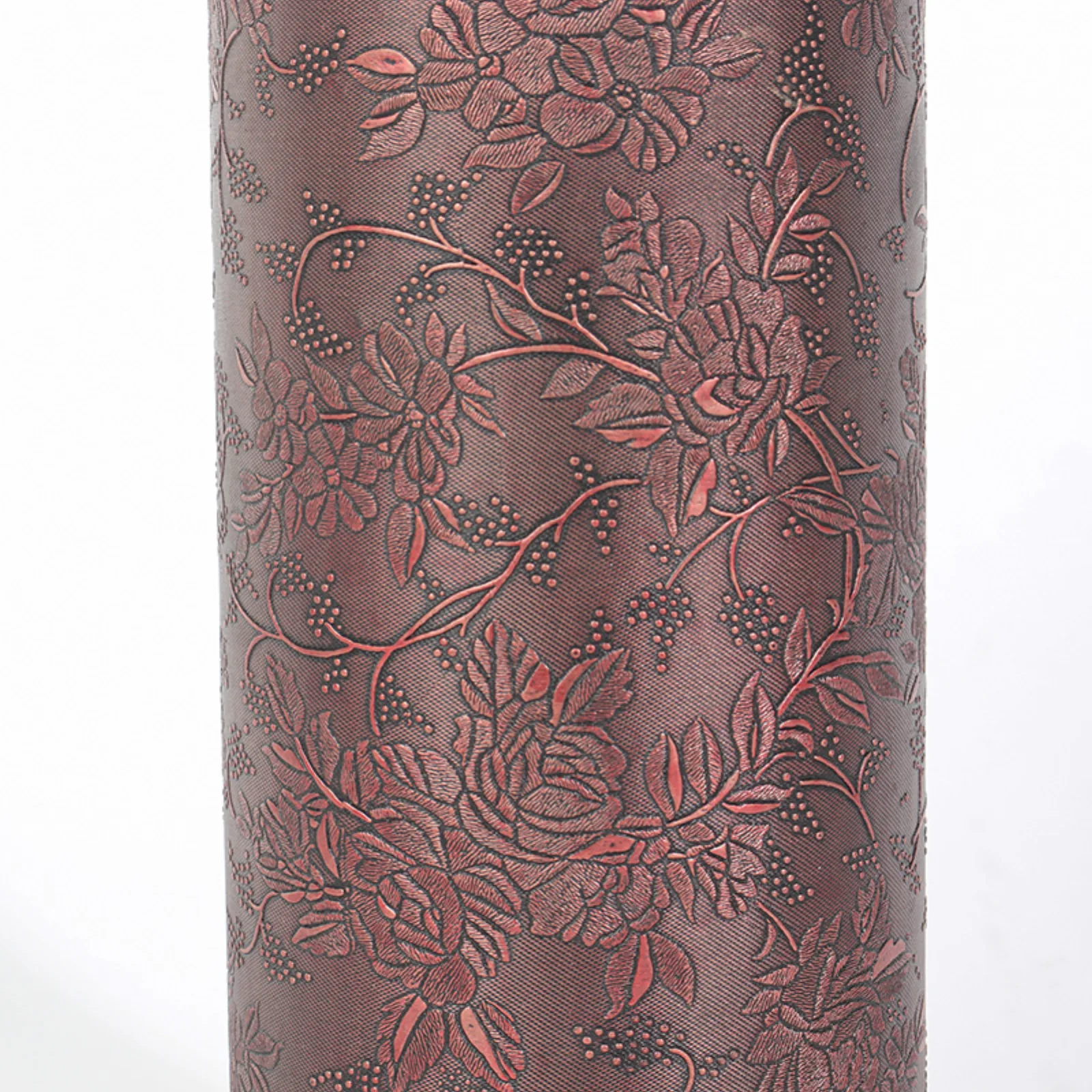
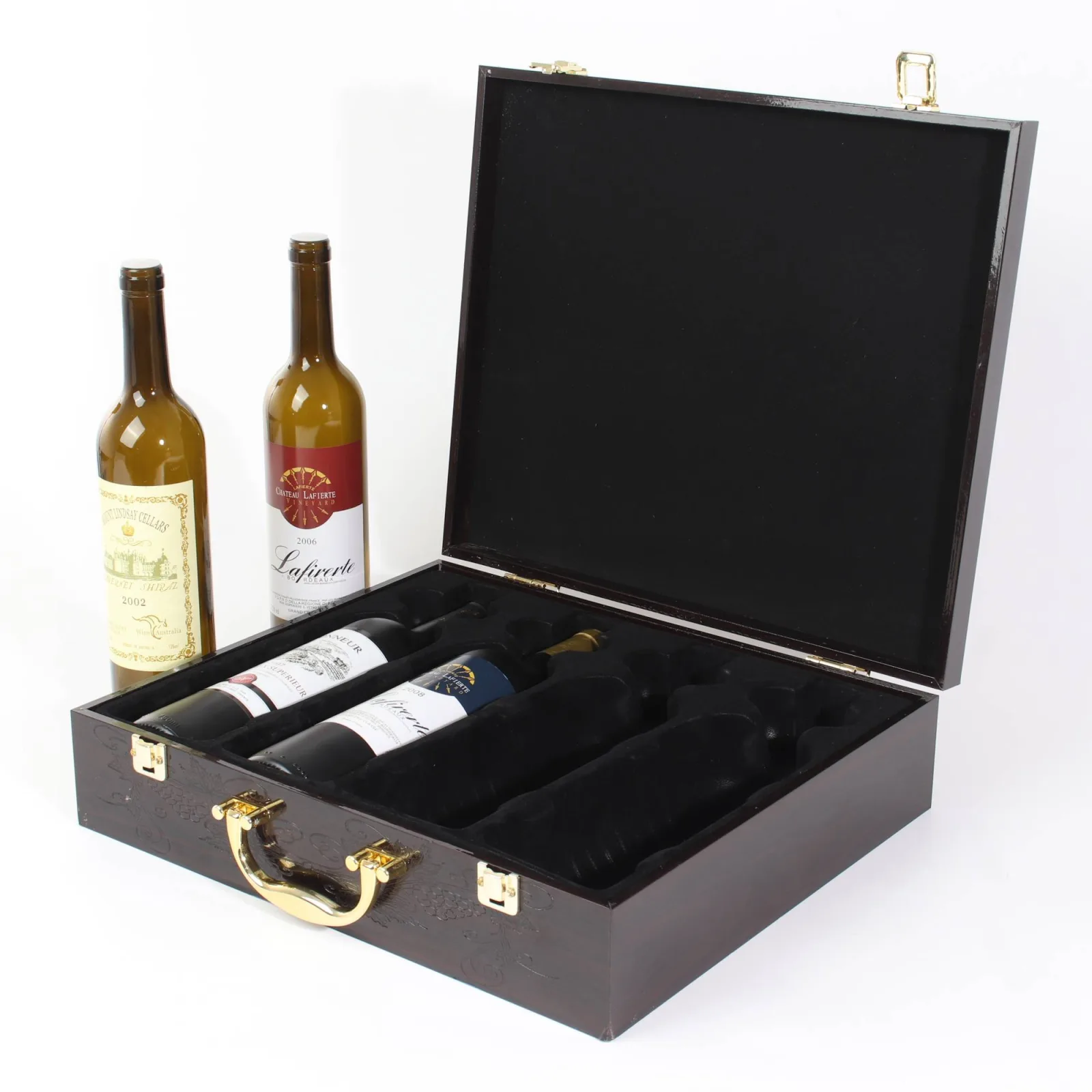
Why are wooden wine boxes the first thing people ask about? Because a bottle ought to feel like a gift even before it's opened. A rigid shell that keeps its shape comes with these boxes. Their surface can take lacquer or engraving, and there's enough weight to show the customer this is no standard cardboard carton. We build single-bottle cylinders and four-bottle presentation cases, while the real work lives in the details, like the hinge, the insert and the finish.
It usually starts with a bottle sample or dimensions, after which we work out the wood thickness, the closure type, and how the bottle should sit inside. This category includes glossy lacquered chests, retro cylindrical tubes featuring rope handles, and simple stained boxes that have sliding lids. What they all share is a structure that must survive being picked up, opened and closed without letting the bottle move.
How to Choose
Start with the bottle. Since a single-bottle wooden box is usually a gift or premium sample, the insert matters more than the box itself. Hold the bottle at four points, two around the base and two around the shoulder or neck, and if it slides forward when the box is tilted 45 degrees the insert is wrong. That's a check we run on every wooden box before it leaves.
Four bottles in a lacquered chest bring weight, so multi-bottle wooden boxes need overbuilt bases and hinges, and you should ask yourself how the box will be opened, with a hinged lid that swings back or a removable lid that lifts off. Hinged lids feel more premium but cost more, because they need stronger hardware. Removable lids are simpler and cheaper to produce, though the lid can get dropped.
The third thing to settle is finish. High gloss lacquer looks impressive, but it shows fingerprints and scratches. A matte stain or natural wood finish hides wear better, and it costs less. Want a logo? Because engraving or foil stamping works on wood, the surface has to be sanded smooth first, as deep grain will break up fine lines.
Buyer questions
Can you make a wooden wine box for a single bottle?
Yes. Single-bottle wooden boxes belong to one of our standard categories, and we can build a cylindrical tube, a rectangular box with a hinged lid, or a sliding drawer. We custom-cut the insert to your bottle dimensions, so send us the bottle sample or its exact diameter and height.
What wood types do you offer for wine boxes?
We machine pine, poplar, birch plywood, and wood-veneered MDF, one of which fits your finish and budget. Costs are lowest with pine but the knots will show. For something that runs smooth and paints well, poplar works. If you need strength plus stability, birch plywood is the better choice, and when a consistent surface under a high gloss lacquer matters, the veneered MDF gives you that.
How do you prevent the bottle from moving inside a wooden box?
Holding the bottle at four points is what the insert does, and we cut it to that shape from EVA foam, a velvet tray, or moulded pulp. Two of those points grip around the base and the shoulder or neck is supported by two more. We'll recut it if there's any movement during a ten-second shake, a 45-degree tilt, or an inversion. Yes, every insert gets tested, every time.
What We Control
Look at solid wood or engineered wood panels for wooden wine boxes, depending on the design. The board thickness follows the box size: a single-bottle cylinder can get away with thinner walls than a four-bottle chest, which has to support its own weight plus the bottles. No recycled wood, and no high-moisture panels that warp after a few weeks in a warehouse. The facing is either a wood veneer, a lacquer coat, or a printed paper wrap made for designs that need full colour.
The insert rule for wooden wine boxes doesn't change from our cardboard boxes: the bottle is held at four points, with no unsupported neck or shoulder. Our control tolerance sits at plus or minus 1 mm on the insert and plus or minus 2 mm on the box body. For foldable or hinged wooden boxes the hinges must not bind, and the corners must sit at 90 degrees when erected. Because colour control on wood hinges on the lacquer or stain, we rely on Pantone matching for painted finishes, first-article approval and mid-run sampling. Black, deep blue and burgundy are the hardest to hold on wood, which means our in-house checks cover a 1.2 m six-face drop test with a loaded bottle, stacking top load of 40 kg or more for 24 hours, and a vibration simulation that mimics truck and sea transport. If the bottle moves after a ten-second shake, the box is rejected.
Get a quote for wooden wine boxes
Send the bottle size or a sample, quantity and a reference design. We reply with structure options and pricing.
- Email[email protected]