11 October 2026
Cardboard Wine Boxes for Sale: How Buyers Specify Them
Cardboard wine boxes for sale at factory level aren't one product. They're a set of structures and materials you configure. So the buying decision runs structure first, material second, insert third, print last. Get that order wrong and you'll pay for rigidity you didn't need, or ship a flat-pack that can't hold a heavy bottle.
Structure Comes Before Everything Else
Six structures cover most of what buyers ask us for: rigid lid-and-base, magnetic closure, drawer, foldable, double-door, and boxes with handles. Which one you pick depends on how the box travels and who opens it. Foldable flat-pack suits volume shipping because it ships and stores flat, then erects at the winery or the warehouse. Rigid lid-and-base suits presentation. It arrives built, it holds its shape on a shelf, and the lid lifts off cleanly. If you're weighing these against each other, the structure comparison walks through the trade-offs side by side.
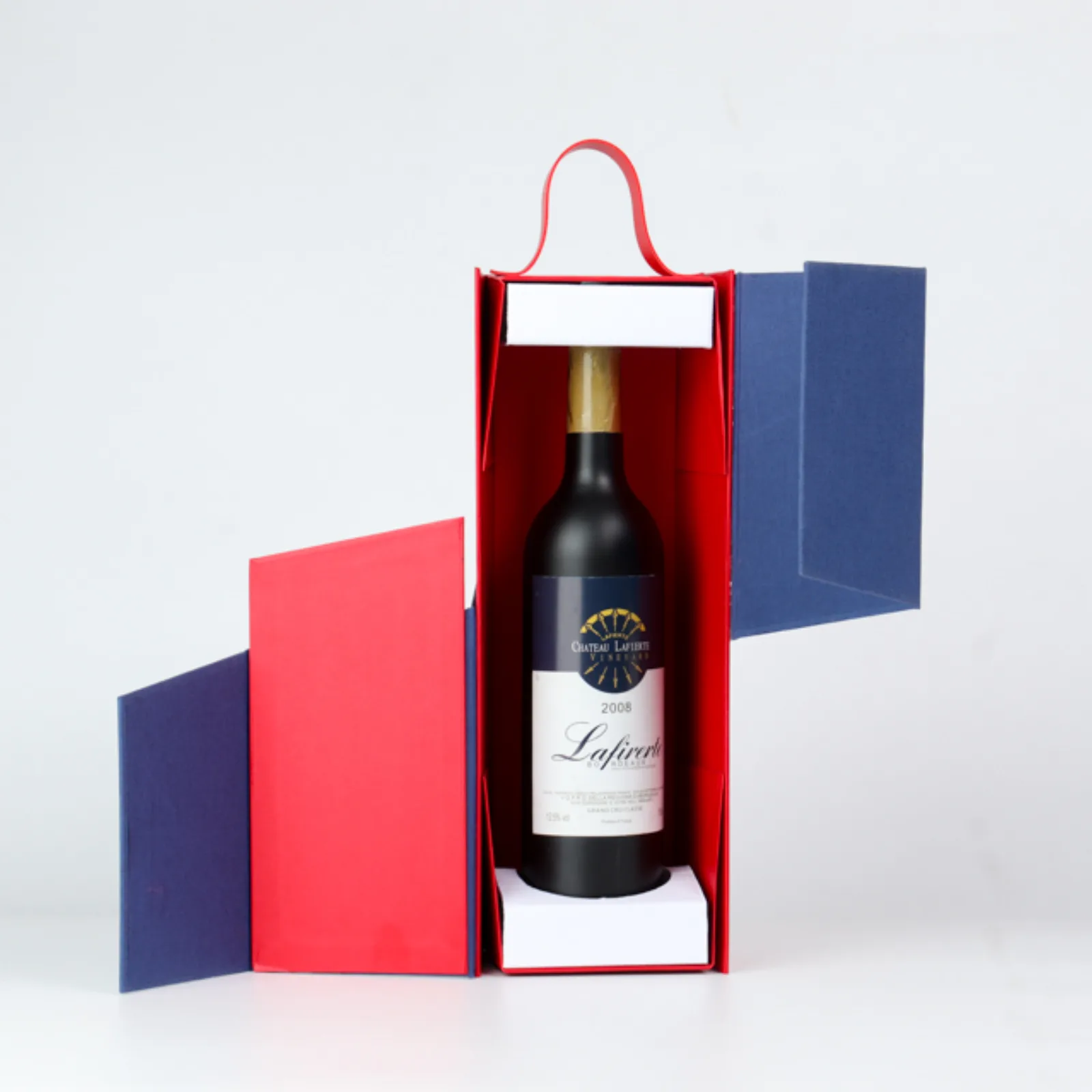
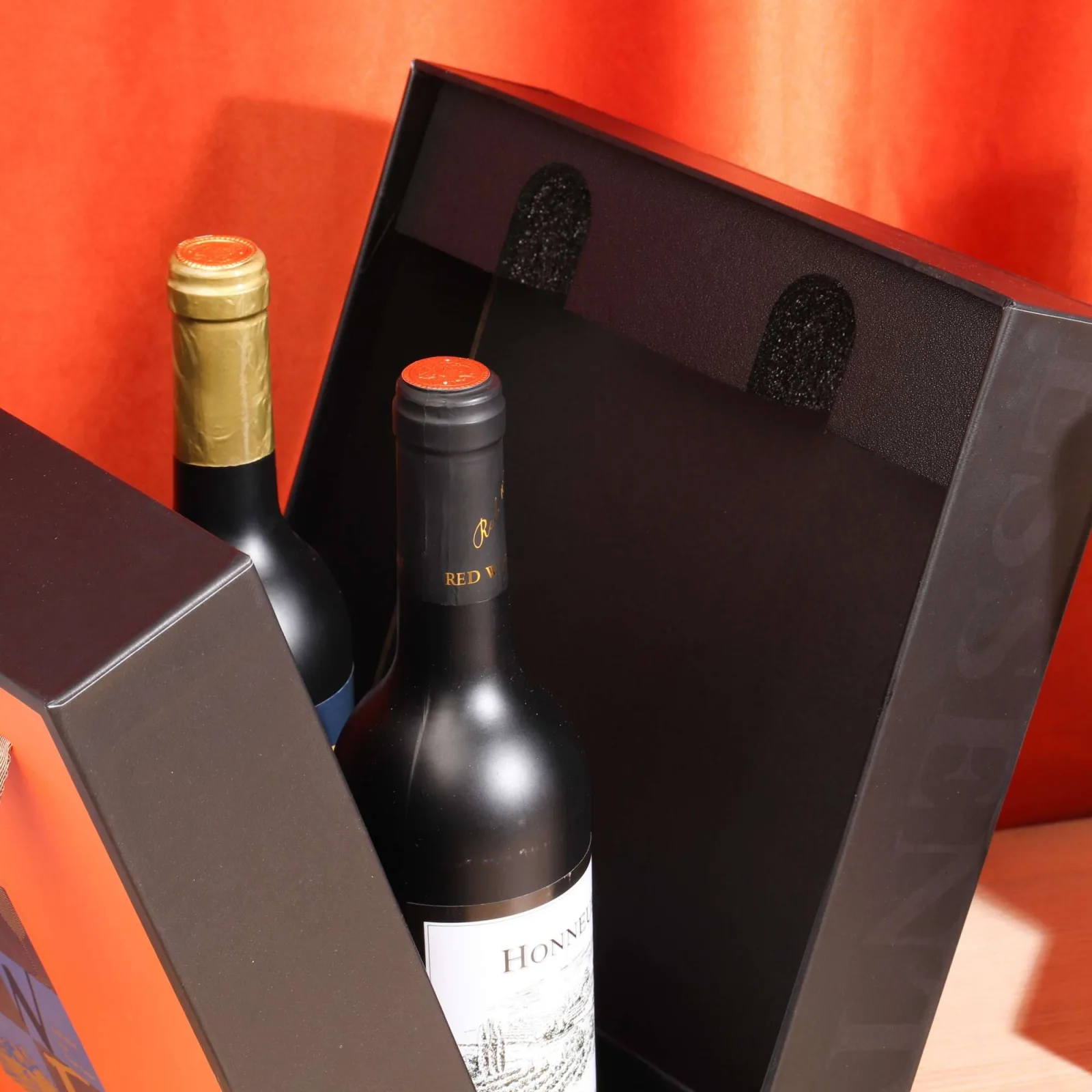
A drawer box gives you a pull-out reveal and works well for two bottles. Double-door opens like a book and reads as a gift. Magnetic closure is the one buyers ask about most, and it's also the one with the tightest tolerance, which I'll come back to. Handles matter more than people expect. A box with a handle gets carried in one hand, and that changes how the load sits inside. For the full range we build, see our cardboard wine boxes.
- Foldable flat-pack ships and stores flat, then erects on site.
- Rigid lid-and-base arrives built and holds shape on a shelf.
- Drawer and double-door structures are for reveal and gifting.
- Magnetic closure needs the tightest magnet position control.
Materials: Board, Facing, and What We Refuse
Greyboard is the core. Our standard is 1200 g minimum, and 1400 g recommended for spirits. That's not a preference, it's what holds a heavy bottle without the walls bowing. Facing paper is 157 g minimum, specialty or coated. Below that you get show-through and scuffing on the corners.
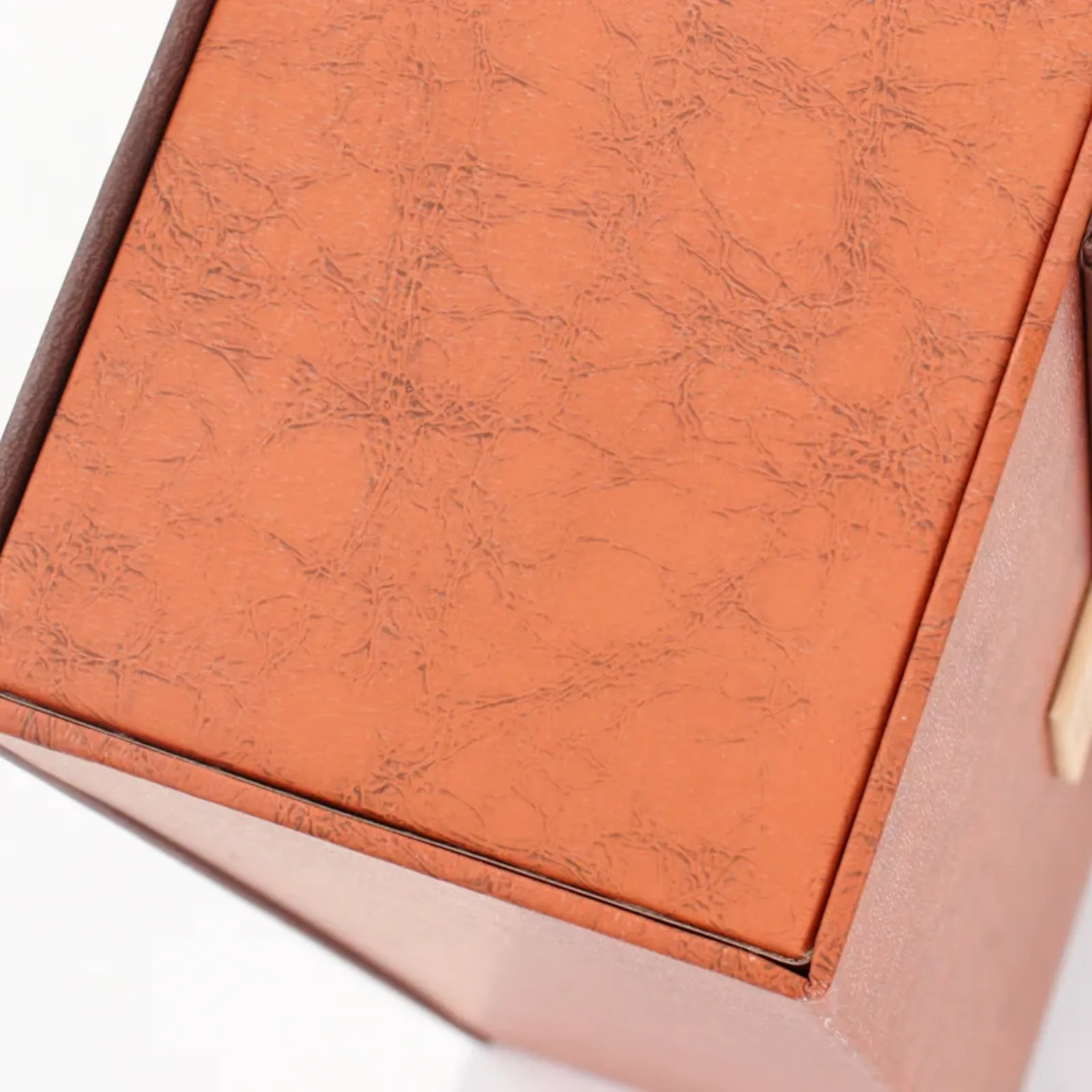
We don't run recycled greyboard. It's inconsistent in density, and inconsistent density means inconsistent creasing and inconsistent corners. We also don't run high-moisture paper. Moisture in the board shows up later as warping, and warping shows up as a lid that doesn't sit flush. Facing options include specialty paper, kraft paper, white card, gold or silver cardboard, flocked paper and leather-textured paper. Kraft reads utilitarian. Flocked and leather-textured read premium. Gold and silver are the least forgiving of handling marks. The materials and structures page lays out the combinations we run.
Inserts Decide Whether the Bottle Survives
Four insert types: velvet tray, EVA foam, blister, and paper mould. Velvet tray is the presentation choice. EVA foam is the workhorse for shipping. Blister holds a formed shape around the bottle. Paper mould is the moulded pulp option.
The rule we build to is simple. The bottle is held at four points, with no unsupported neck or shoulder. A bottle supported only at the base will rock, and a rocking bottle finds the weakest point in the box. Insert control tolerance is plus or minus 1 mm. Box body control tolerance is plus or minus 2 mm. The insert is tighter because that's where the fit lives.
Then we check it. Shake for 10 seconds, no movement. Tilt 45 degrees, no slide. Invert, no release. If a box fails any of those, the insert gets reworked, not the test. These checks sit alongside our quality control process, which includes a 1.2 m six-face drop test with the bottle loaded, a stacking top load of 40 kg or more for 24 hours, and truck and sea vibration simulation with no internal movement.
The Failures I Actually See
Creases cracking on foldable boxes. That's a board and scoring problem, and it shows up after the box has been folded and unfolded a few times, not on the first fold. Magnet position drifting beyond plus or minus 1 mm. When that happens the lid doesn't pull shut, or it pulls shut with a gap on one side. Corners not at 90 degrees when erected. On a flat-pack that's usually a scoring or a board moisture issue, and it's the defect buyers notice first because it's visible from across a room.
Colour is the other one. Black, deep blue and burgundy are the hardest to hold. Deep solid colours show every variation, and burgundy shifts in a way that's hard to describe until you see two boxes side by side. That's why we run Pantone matching, first-article approval and mid-run sampling. If your brand colour is a deep blue, expect to spend more attention there than on a lighter tone.
- Creases crack after repeated folding, not on the first fold.
- Magnet drift past plus or minus 1 mm leaves a lid gap.
- Corners off 90 degrees are the most visible defect.
- Black, deep blue and burgundy are the hardest colours to hold.
What 'For Sale' Means at Factory Level
It means custom structures against stock shapes. Stock shapes exist and they're fine if your bottle is a standard Bordeaux or Burgundy profile and you don't need anything specific. The moment your bottle is heavier, taller, or has an unusual shoulder, you're into a custom structure. That's the OEM and ODM process: design support, structure development, material selection, printing and finishing.
Samples come in two types. A blank sample shows you the structure, unprinted. A printed sample shows you the visuals. Buyers often want the printed one first, and that's backwards. Approve the structure on a blank, then approve the print. And sample before mass production, always. A structure that looks right on a drawing can fail the shake test.
When We're the Wrong Answer
If you need insulated or cooler bags, we don't make those. Neoprene, no. Plastic, no. Glass or metal tins, no. Bottle labels, no. I'd rather tell you that now than take an inquiry and hand it back later. We make wine boxes and wine bags: wooden, cardboard and rigid, leather, shipping and gift boxes, plus paper, felt and canvas, leather and Christmas bags. If your project sits outside that, you need a different supplier, and that's a fine outcome.
What to Send Us
Box dimensions, or a bottle sample if the shape is unusual. A reference design if you have one. Quantity. Any special requirements, and be specific about those, because 'premium feel' means different things to different buyers. Send it through the quote form or email us. We've been making packaging since 2014 in Yiwu, and we work with customers in over 30 countries. The eight steps from consultation to packing are the same whether it's a single structure or a full range.
Key points
- Pick the structure before the material, and the insert before the print.
- Greyboard 1200 g minimum, 1400 g for spirits, no recycled board.
- Bottle held at four points, no unsupported neck or shoulder.
- Black, deep blue and burgundy are the hardest colours to hold.
- Approve the blank sample for structure, then the printed sample.
Questions buyers ask
What's the difference between a blank sample and a printed sample?
A blank sample shows the structure unprinted, so you can check the fit, the corners and the insert. A printed sample shows the visuals. Approve the structure on the blank first, then the print. Doing it the other way around means you might approve a look that sits on a structure that doesn't hold your bottle.
Can you make a cardboard wine box for a non-standard bottle?
Yes, that's the custom structure route. Send the bottle or its dimensions and we develop the structure around it. Insert tolerance is plus or minus 1 mm, box body plus or minus 2 mm. If your bottle has an unusual shoulder, the insert gets built to hold it at four points.
Which insert should I choose for shipping versus gifting?
EVA foam is the shipping choice because it holds under vibration and drop. Velvet tray is the gifting choice because it presents well when the lid comes off. Paper mould sits between them. Whichever you pick, the bottle still has to pass the shake, tilt and invert checks before it ships.
Send your box dimensions or a bottle sample, reference design, quantity and special requirements through the quote form or email, and we'll come back with a structure recommendation. Get a Quote
Put this on your bottle
Send the bottle sample or dimensions, quantity and a reference design. We reply with structure options and pricing.
- Email[email protected]