27 September 2026
Custom Wooden Wine Crates: A Wholesale Buyer Guide
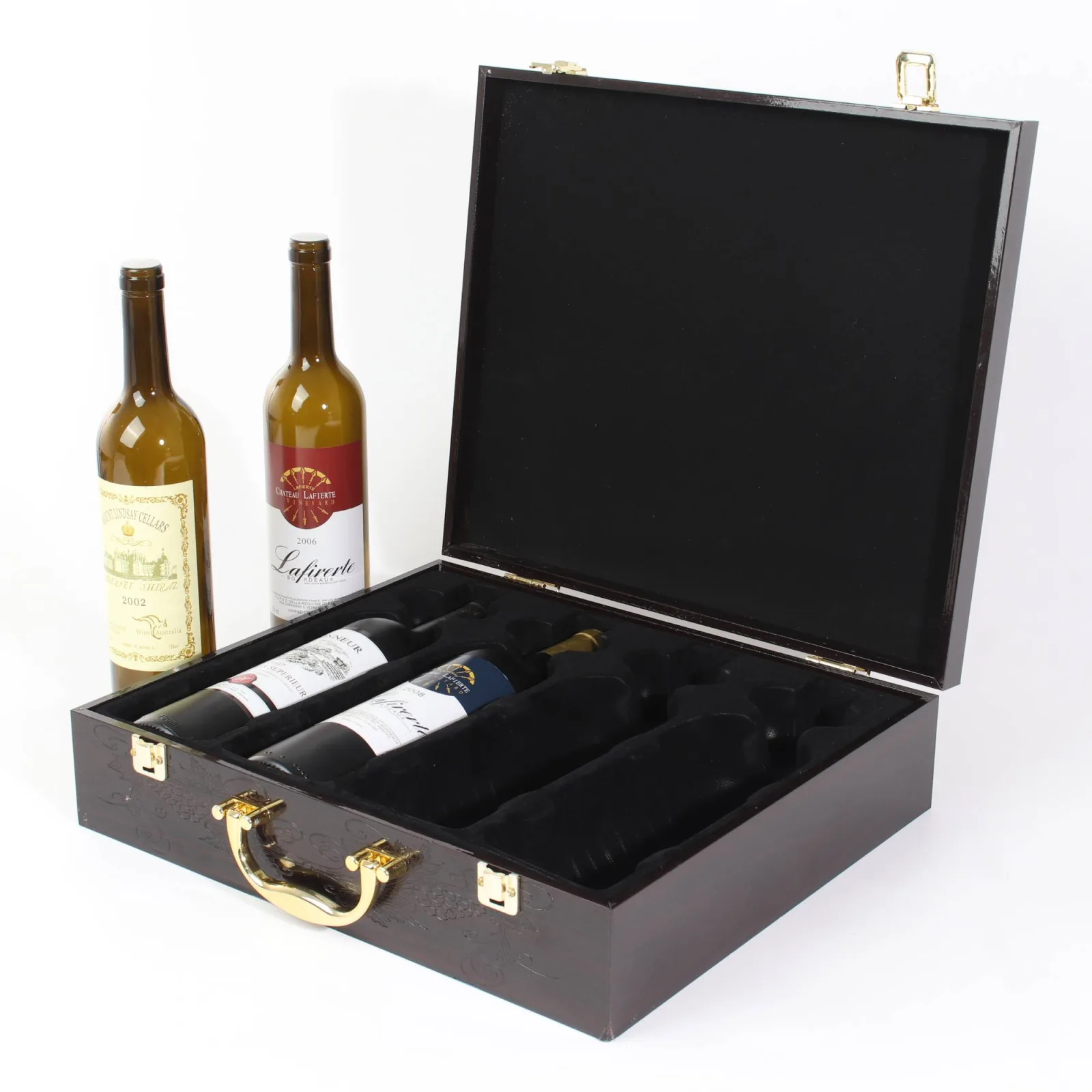
Custom wooden wine crates come down to four decisions: the structure, the wood and finish, the insert that holds the bottles, and how your branding goes on. They differ from a single-bottle wooden gift box mainly in how they carry multiple bottles and how they get packed for shipping. Get those four right and the rest is detail.
Crate Structure: Lid and Base or Slatted
Start with lid-and-base. A solid body with a separate lid is the structure most buyers mean when they say wooden wine crates wholesale. It holds its shape, the lid sits flat, and the walls give you a surface for branding. If your crate travels by courier and gets stacked, this is usually the right answer.
Slatted crates are lighter and read more rustic. They work when the crate is a display piece on a shelf, not a box that gets loaded three times before it reaches the customer. Here's the trade-off: slats flex. A slatted crate that flexes under load can rub the bottle shoulder and crack a finish. If you want slats, keep the load to a few bottles and pack it so nothing presses on the middle of a panel.
A wooden wine case built for shipping needs thicker walls than one built for a tasting room. That's not a spec I can hand you as a number, because it depends on your bottle weight and how the crate ships. Tell us both and we'll pick the wall.
- Lid-and-base holds shape and gives a flat surface for branding.
- Slatted crates are lighter and read rustic, but flex under load.
- Match wall thickness to bottle weight and shipping method, not to looks.
Wood and Finish Options
Wood choice drives the look more than any print does. You'll see pine, paulownia and other light woods used for crates, plus MDF cores with a wood-look facing where you want a very even surface. Paulownia is light, which matters when you ship. Pine shows grain and takes a stain well. If you want a dead-flat surface for a printed logo, a faced panel gets you there.
Finish is where buyers get surprised. High gloss lacquer gives you depth and a wet look, and it shows every fingerprint and every scratch. Matte hides handling marks and reads more restrained. On a dark finish, gloss makes small defects visible. That's the honest trade.
Colour control is the hard part. Black, deep blue and burgundy are the hardest to hold, and wood grain moves under them. We match Pantone, approve a first article, then sample mid-run. If your brand colour is a deep navy, expect to look at a physical sample, not a screen.
- Paulownia is light, which helps when the crate ships.
- Pine shows grain and takes stain; faced panels give a flat print surface.
- Gloss shows fingerprints and scratches; matte hides handling marks.
- Dark finishes make colour drift and small defects more visible.
Branding: Print, Foil and Embossing
Print works on flat, faced panels and on smooth wood. It gives you full colour and fine detail. On open-grain wood, ink sits in the grain and lines soften, so a thin logo can look fuzzy. If your artwork has fine type, print it on a faced panel or keep it large.
Foil is a metal stamp, usually gold or silver, pressed into the surface. It reads premium and it holds up on wood better than most buyers expect. Where it works: a logo, a crest, a short line of type. Where it doesn't: gradients, photos, tiny text. Foil is a single colour per pass.
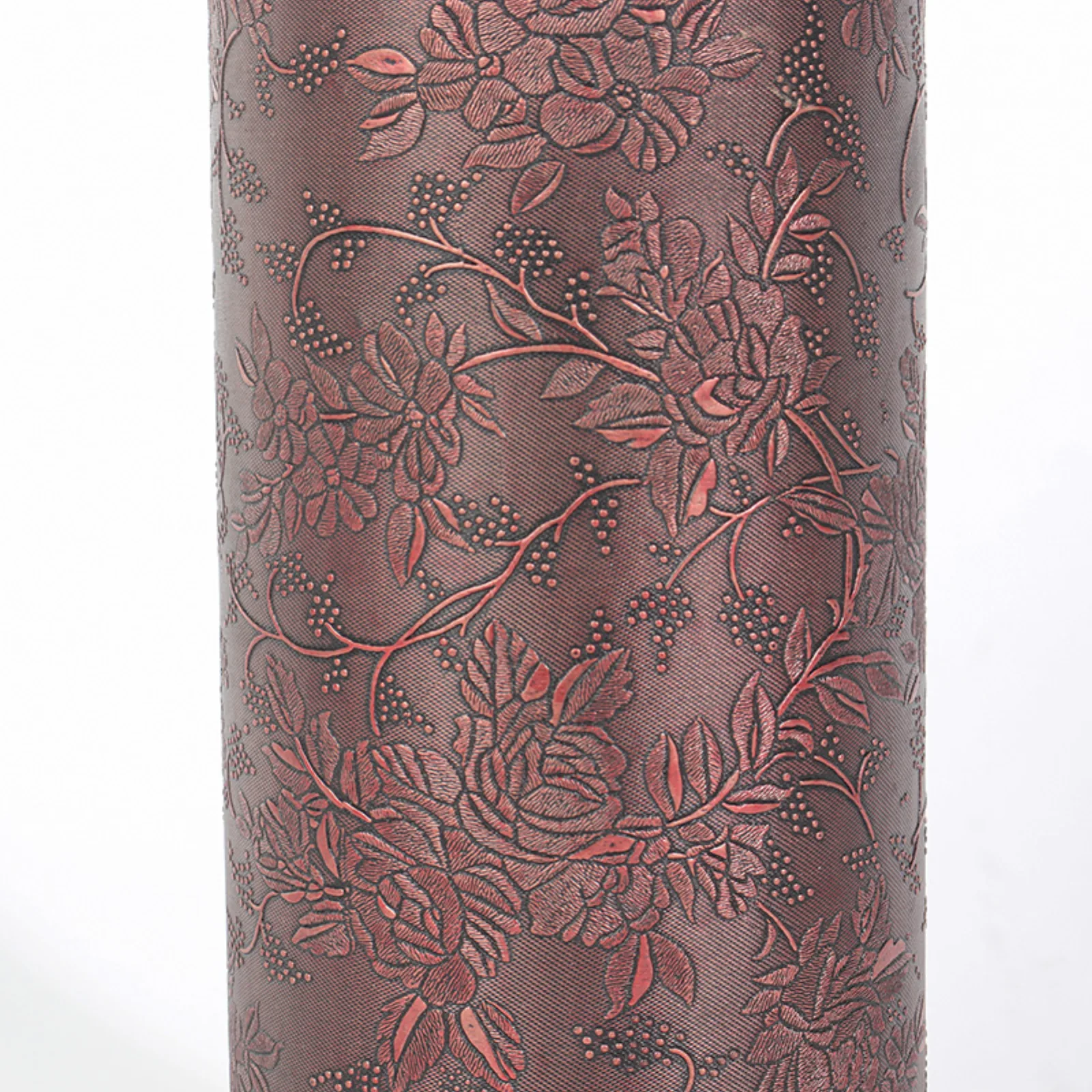
Embossing raises the surface without ink. It's subtle and it catches light. Blind emboss on a matte finish is one of the cleaner looks on a wooden crate, and it hides wear because there's no colour to chip. Combine foil and emboss and you get depth plus colour, which is the most common premium treatment we run.
- Print gives full colour but softens on open-grain wood.
- Foil holds well on wood; one colour per pass, no gradients.
- Blind emboss hides wear because there is no colour to chip.
Inserts and Protection for Multi-Bottle Loads
The insert is where a crate succeeds or fails. Four options cover most work: velvet tray, EVA foam, blister, and paper mould. Velvet tray reads luxury and cushions well. EVA foam is the workhorse for shipping because it holds shape and absorbs shock. Blister is a formed plastic shell that grips the bottle. Paper mould is the moulded pulp option, and it's the one buyers pick when they want a paper-based insert.
Every insert follows the same rule: the bottle is held at four points, with no unsupported neck or shoulder. If the neck floats, the shoulder takes the load and the bottle moves. Our control tolerance is plus or minus 1 mm on the insert and plus or minus 2 mm on the box body. That's tight enough that a bottle doesn't rattle, and loose enough that it still comes out.
We check it three ways. Shake for 10 seconds and nothing moves. Tilt to 45 degrees and nothing slides. Invert it and nothing releases. If a sample fails any of those, we change the insert, not the test. You can see how this fits into the wider process on our page about how we control quality.
- Velvet tray reads luxury; EVA foam is the shipping workhorse.
- Blister grips the bottle; paper mould is the paper-based option.
- Bottle held at four points, no unsupported neck or shoulder.
- Our control tolerance: insert plus or minus 1 mm, box body plus or minus 2 mm.
- Shake 10 seconds, tilt 45 degrees, invert: no movement, no slide, no release.
Failure Modes to Flag Before You Order
A slatted crate that flexes is the first one. It shows up when the crate is picked up by one end and the whole thing twists. The fix is a stiffer frame or a solid panel, and it has to be caught at sample stage.
A lid that does not sit flush is the second. It's usually a hinge or a magnet position problem. We hold magnet position to plus or minus 1 mm and corners to 90 degrees when erected, because a lid that's off by a little looks off by a lot on a dark finish.
An insert that lets the bottle slide is the third, and it's the one that costs you returns. Colour drift on dark finishes is the fourth. Both are caught by sampling, not by hoping. If you want the full picture of how a crate gets built, our custom wine box manufacturing page walks the eight steps from consultation to packing.
- A slatted crate that flexes twists when lifted by one end.
- A lid that does not sit flush usually traces to hinge or magnet position.
- An insert that lets the bottle slide is the failure that costs returns.
- Colour drift on dark finishes shows up on the shelf, not in the sample photo.
When a Wooden Crate Is the Wrong Answer
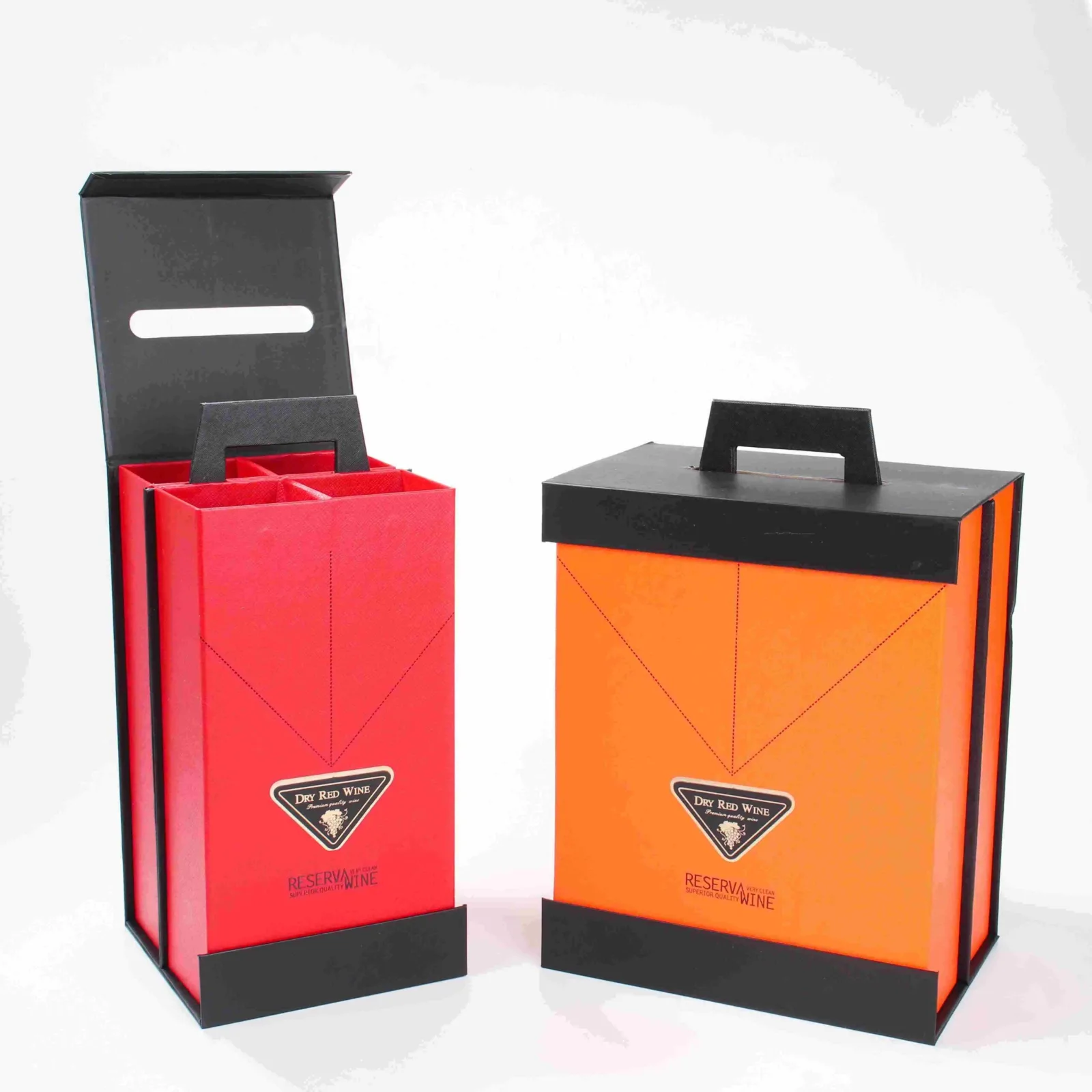
Here's the blunt version. If you need a fully enclosed, high-gloss presentation box for a single bottle, a wooden crate is not your best fit. A rigid cardboard box or a leather box gives you a cleaner edge, a tighter lid line, and a surface that takes a high-gloss finish without the grain working against you. Wood is for weight, for texture, and for the sense that the bottle arrived in something solid.
Multi-bottle loads are where wood earns its place. A crate that carries several bottles, protects them in transit, and doubles as a display piece is the case for wood. A single bottle in a velvet-lined box is usually better served by another material. If you're weighing that choice, our wooden wine boxes page shows what we build, and the materials and structures section covers the alternatives next to it.
- Single bottle, high gloss, fully enclosed: rigid cardboard or leather fits better.
- Wood earns its place on multi-bottle loads and display weight.
- Wood grain works against a flawless high-gloss surface.
What to Send Us
Four things get a quote moving: the box dimensions or a bottle sample, a reference design, the quantity, and any special requirements. A bottle sample beats a drawing every time, because we can measure the shoulder and the base and build the insert around the real thing.
On quantity, we run flexible MOQ for custom orders, and we sample before mass production. Two sample types are available: a blank sample to check structure, and a printed sample to check the visual. Send the brief through the quote form or to our sales address, and we'll come back with the structure and material call.
If you're ordering across several box types at once, the bulk wine crates guide covers how to line up a mixed program so the crates, bags and gift boxes ship together.
- Send dimensions or a bottle sample, a reference design, quantity and special requirements.
- Blank sample checks structure; printed sample checks the visual.
- A bottle sample lets us measure the shoulder and base for the insert.
Key points
- Specify structure, wood and finish, insert, and branding in that order.
- Bottle held at four points; no unsupported neck or shoulder.
- Our control tolerance: insert plus or minus 1 mm, box body plus or minus 2 mm.
- Slatted crates flex, lids sit proud, inserts let bottles slide: catch all three at sample.
- Single-bottle high-gloss presentation is often better in cardboard or leather.
Questions buyers ask
What is the difference between a wooden wine crate and a wooden wine box?
A crate usually carries multiple bottles and is built to take shipping loads, with a stiffer frame and a shipping-ready insert. A wooden wine box often means a single-bottle gift box. The structure, not the name, decides which one you need.
Which insert should I pick for a multi-bottle crate?
EVA foam is the usual choice for shipping because it holds shape and absorbs shock. Velvet tray reads more luxury. Blister grips the bottle tightly. Paper mould is the paper-based option. All four follow the same rule: four points of contact, no unsupported neck or shoulder.
How do I stop colour drift on a dark wooden crate?
Black, deep blue and burgundy are the hardest to hold, and wood grain moves under them. We match Pantone, approve a first article, then sample mid-run. Expect to check a physical sample, not a screen, before the run goes ahead.
Send your box dimensions or a bottle sample, a reference design, quantity and any special requirements, and we'll come back with the structure and material call. Get a Quote
Put this on your bottle
Send the bottle sample or dimensions, quantity and a reference design. We reply with structure options and pricing.
- Email[email protected]